 Add to Chrome
 Add to Firefox
 Add to Edge
TB-AVA: Text as a Semantic Bridge for Audio-Visual Parameter Efficient Finetuning
May 13, 2026
Audio-visual understanding requires effective alignment between heterogeneous modalities, yet cross-modal correspondence remains challenging when temporally aligned audio and visual signals lack clear semantic correspondence. We propose to use text as a semantic anchor for audio-visual representation learning. To this end, we introduce a parameter-efficient adaptation framework built on frozen audio and visual encoders, centered on Text-Bridged Audio-Visual Adapter (TB-AVA), which enables text-mediated interaction between audio and visual streams. At the core of TB-AVA, Gated Semantic Modulation (GSM) selectively modulates feature channels based on text-inferred semantic relevance. We evaluate the proposed approach on multiple benchmarks, including AVE, AVS, and AVVP, where the proposed framework achieves state-of-the-art performance, demonstrating text as an effective semantic anchor for parameter-efficient fine-tuning (PEFT) in audio-visual learning.

Using Large Language Models for education managements in Vietnamese with low resources
Jan 25, 2025
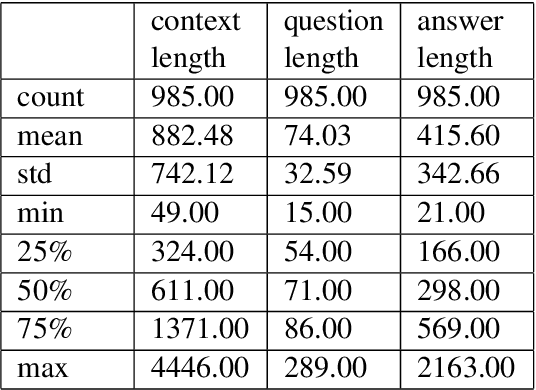
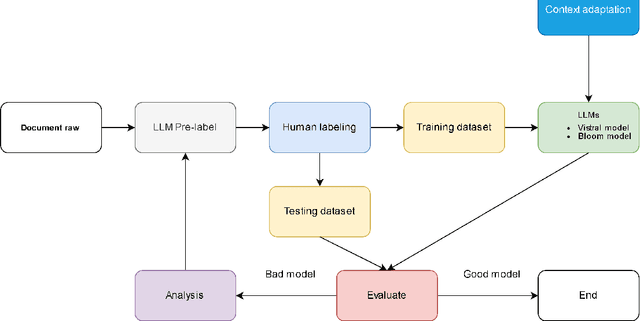
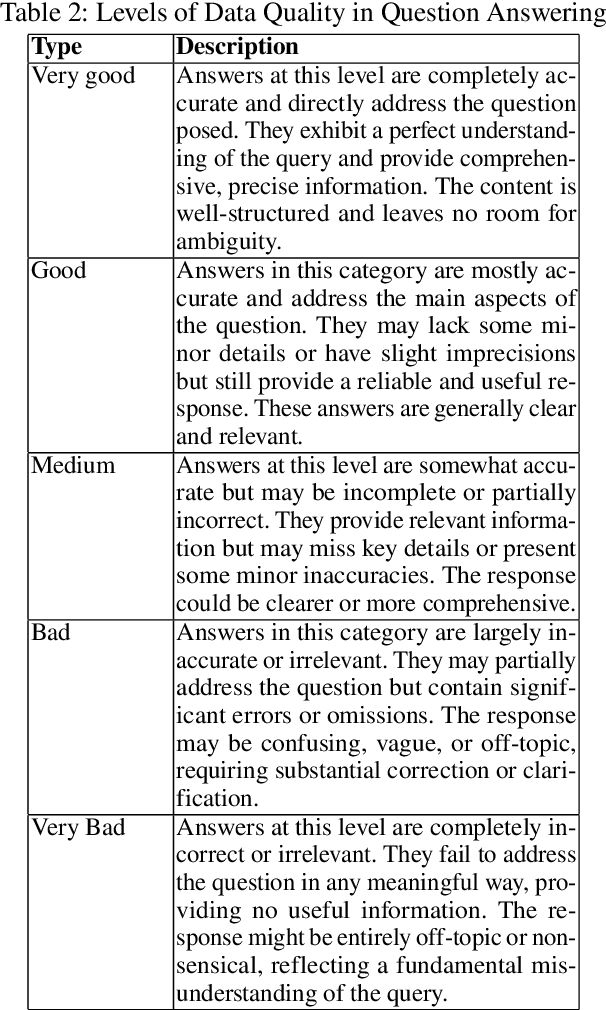
Large language models (LLMs), such as GPT-4, Gemini 1.5, Claude 3.5 Sonnet, and Llama3, have demonstrated significant advancements in various NLP tasks since the release of ChatGPT in 2022. Despite their success, fine-tuning and deploying LLMs remain computationally expensive, especially in resource-constrained environments. In this paper, we proposed VietEduFrame, a framework specifically designed to apply LLMs to educational management tasks in Vietnamese institutions. Our key contribution includes the development of a tailored dataset, derived from student education documents at Hanoi VNU, which addresses the unique challenges faced by educational systems with limited resources. Through extensive experiments, we show that our approach outperforms existing methods in terms of accuracy and efficiency, offering a promising solution for improving educational management in under-resourced environments. While our framework leverages synthetic data to supplement real-world examples, we discuss potential limitations regarding broader applicability and robustness in future implementations.